Thursday, 20 November 2014

population with internet access to pass 3bn next year.

It is said that by next year 2015 the current figure of 2.7 billion people that are currently online users who use the internet is said to increase hugely up to 3 billion. This is nearly half the worlds population. The figure is said to have increased due to the production of the mobile phone and tablet devices which are coming out. They are becoming increasingly more cheaper than ever with prices being as low as £99. This is all over the world. It is also estimated that by 2017 there will be around then nearly half of the population online with either a computer or phone maybe tablets that the amount would be increased to just over 3.7 billion online users.

http://i.telegraph.co.uk/multimedia/archive/03112/girl-phone_3112939b.jpg


  • Currently 2.8 billion online users 
  • estimated to increase to 3bn by 2015
  • Estimated to increase to 3.7bn by 2017
I believe that the increase is due to infact technology becoming cheaper and cheaper. Most products are made from china where technology and parts are made cheaply aling side with the labour that they offer a t a very cheap price. This would mean that most of the world would soon be able to afford a communications device which will be able to connect to the internet which adds to the current amount of online users. I believe that by 2017 there will be well over more than 3.7bn users which will be online. 


Build the wall analysis

Section 1:
In the first section the author David Simon, talks about how the internet is as we all see it as a free privilege. It allows us to access many different things which in this case he is talking about the news. The news can be seen and read through websites created and managed by newspapers themselves like the times and the sun. He also mentions how a newspaper and reading news online may not give the exact same experience as they are both different in many different ways, some negative and some positive.

Section 2 :
The second section is quite similar discussing how people are finding that buying newspapers is getting old, a bit old fashioned. People have now moved on and have started to purchase news online, however not everyone. People now prefer to access their news and to view their news online as it has many benefits to it. Furthermore most of the news online is free meaning they won't have to be paying for it. The section also discusses how the newspapers are getting more vulnerable.

Section 3 :
The third section was mostly talking about some facts and statistics that were used and mentioned in the section by the writer. This was done so that they can back up their points. For example "10 percent of the existing 210,000 Baltimore Sun readers, for example, who pay a subscription rate less than half the price of home delivery, or roughly $10, would represent about $2.5 million a year. Absent the cost of trucks, gas, paper, and presses, moneylike that represents the beginnings of a solid revenue stream"

Section 4:
In the last section of the article David talks about the risk of newspapers moving on to pay wall, making people pay for the news rather then giving it out for free online. He discusses how many of the newspapers will be following on and changing as they'll find that they won't be able to survive without paying people for their services. This is understandable due to people reading less newspapers meaning they wont be getting as much money as they once did. For them to survive them must result to putting up pay walls, as David says most newspapers will build that pay wall up.


In the article David talks about the pay wall and why newspapers would be putting up the paywall and how it would benefit both parties. he discusses why people are buying less newspapers due to new and digital media. How people are finding newspapers old-fashioned and how news online is more convenient. Which is true due to most people owning smart phones which they could access anywhere with a touch of an app. However, currently most newspapers are giving their news out for free, David says this would not be forever as they can not afford to do so due to the shortage of income the business are getting from their consumers who are the news readers.


Comment 1:

Most of the folks writing about the paywall issue are assuming that because only 5-10 

percent of the current online readership will sign

up for web content, it will be a failure. Actually, the folks behind the paywall effort don't care 

if anyone signs up for online content. 

The entire point is to push people into print subscriptions. It could be that some newspapers 

or groups won't even offer an online-only 

option. It will just be a free giveaway with print.

#3 Posted by Morgan Cartwright on Thu 16 Jul 2009 at 12:23 PM


Morgan disagrees with the whole pay wall idea as he believes it would be a failure as he say

only 5-10 percent of current online readers will sign up to these pay walls that they will force 

up on the people who read news on a daily basis. He believes that they should force people

to carry on the traditional way and make them pay fro print subscriptions. 


Comment 2 : 


will never pay for “news” again. Most news is not truly news - it is sensationalism, hype and 

deception. Most news is not balanced - every editor is biased. And it is not just that - I truly 

can not afford to pay for news. Academics, especially with tenure, got it made in the shade 

and may be able to afford to follow the “news” as they are funded and it does not come out 

of their pockets. The question comes down to this - do we want an informed public or not. 

The answer, at least right now, is no. If the public were truly properly informed the American 

people would not allow Wall Street to gut Main Street, would not believe the lies of “the 

terrorists are going to destroy our way of life” and would understand that it really makes no 

difference - except in perception - of who holds the title of chief cheerleader - oops I mean 

Commander in Chief, President, which should be renamed CEO of America Incorporated.

#9 Posted by Lawrence Turner on Fri 17 Jul 2009 at 11:55 AM


Here we see Lawrence saying that he will never ever pay for news again due to him 

believing that news that is published today is not truly news, he believes it's deception and 

not balanced at all. He also says that he is not able to pay for news as he simply cannot 

afford to pay for it. Here we see that he is against David, some people may also feel the 

same way about news and may not be able to afford it if all news was to be paid for. 

Comment 3:

Please do this. Authoritative resources are being lost in the wikipedia world.One mst go 

around the world to find authoritative on the groud reporting. I would pay for it, no question.

#8 Posted by Judy on Fri 17 Jul 2009 at 11:47 AM


Here we see a person who feels that paying is better than getting it free. Here we see a 

person who values news and knows the worth and what it takes to get the news. Which is 

why he believes that news should be paid for and that he does not mind paying as what 

you get for free would not be as good as what you are going to pay for. 


Conclusion: 


I do believe that news should be paid for. Newspaper corporations should in fact put up pay 

walls so that they are able to make money to pay what their audiences ask for which is in 

fact great news. Since the internet came a long i believe that newspapers were not quick to 

act with the change. This i must say to most of the newspapers.Now that people are so 

used to getting free news they do not want to change as they like the idea of something 

being free. Of course if newspapers decide to then change all of a sudden and begin to 

charge for the news they provide online, most readers will not be happy. This may be due 

to the fact that there is a lack of knowledge to readers knowing exactly where news comes 

from and how hard people like journalists work to go and get the news readers are informed 

daily about. Newsreaders take newspapers who supply free news for granted and see 

those who charge for example like newcorp as them trying to rinse out as much as they can 

get 

from readers. People must accept that news will not be supplied to the world for free and 

people will not work for these readers for free. These newspapers are business' they are 

not charities. If news was to be free it would mean that great journalists would be made 

redundant as news corporations would not be able to afford them. This would reduce the 

quality of news which is produced due to a shortage in journalists which are professionals 

at what they do. Paywalls should be put up for readers to be satisfied with the news they 

are currently receiving, or else news corporations will turn into "buzzfeeds" 

which dumbs down audiences through their ridiculous posts and articles which are 

pointless. So in conclusion I agree with David. Yes to pay walls!

Friday, 14 November 2014

David Cameron: Google, Facebook and Twitter have duty to take down extremist material

David Cameron says that the technology giants in the media being Facebook, twitter Google and the rest must be aware and face up to their responsibilities. they must check what they have online and must be responsible for taking down inappropriate material from on-line so that the website can be a safer place. Dave Cameron and the internet providers have agreed to put on a panic button for every users so that they are able to report inappropriate material so that broadband companies are able to do something about it or report it further towards the  companies that have them on their sites.

http://i.telegraph.co.uk/multimedia/archive/03106/david-cameron_3106329b.jpg


  • terror related posting 
  • new panic button for online users 
  • 1000 terrorist posts which are terrorist breach acts

I believe that David Cameron is right to step up and complain and also take into consideration what's online. He also makes a point where companies must live up to their responsibilities and should try to make a contribution just like the broadband campanies installing a panic button. 


Spotify CEO speaks out on Taylor Swift albums removal: 'I'm really frustrated'

Spotify CEO speaks out on Taylor Swift albums removal: 'I'm really frustrated'

http://www.theguardian.com/technology/2014/nov/11/spotify-ceo-taylor-swift-albums-daniel-ek
Daniel Ek: ‘The talk swirling around lately about how Spotify is making money on the backs of artists upsets me big time’
This was about the CEO of Spotify making his first comment about the Taylor Swift situation.
  • Spotify chief executive Daniel Ek has responded to Taylor Swift’s decision to remove her albums from the streaming service with a blog post tackling what he describes as the “myths” of streaming music.
  • In his post, Ek announced that Spotify now has 50 million active users, with 12.5 million of them paying for a monthly subscription.
  • He added that Spotify has now paid out more than $2bn in royalties to labels and publishers.
  • Ek also defended Spotify’s “blend” of free and subscription music, with Swift having removed her albums because the company refused to only make them available to its paying subscribers.
  • Ek also claimed that a top artist like Taylor Swift can expect to earn $6 a year from Spotify streams
I think what Taylor Swift and her label did was not clever.They were making a lot of money out of this online streaming system and if they don't like that - well they have too because thats were the music industry has gone to now. 

Sunday, 2 November 2014

1994 in technology: What the Internet, computers and phones were like 20 years ago

In this article it talks about how the internet has changed from back in 1994 till this present day in 2014. Some of the facts that the article talks about is how everything has changed for examples back in the day there was only about 10,000 websites online where people could go on to and do what they wanted to do. Whereas now there are over 45 billion websites which is a huge amount compared to how many there used to be. It also talks about how the internet was sonly used by scientists and scholars for research purposes. Compared to now people use it for communication and entertainment purposes which is what its used for by the majority of internet users.


  • Internet had around 10,000 websites 
  • Internet has over 45 billion websites
  • Internet was only used for research purposes 

I believe that the internet has changed in many different ways not only for the bad but also for the good of the people that use it. There are many online internet users around 2.7 billion.  The internet has become for some unbearable to live without due to it being included in their daily routine. Phones and computers are checked every minute by some. Checking for status updates and many more.

http://www.syracuse.com/news/index.ssf/2014/11/technology_history_internet_computers_phones_1994.html

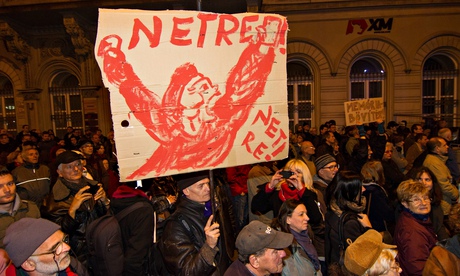
Hungary’s prime minister scraps draft law taxing internet use

Hungary's prime minister had tried to put a tax on the internet that for each household that uses it or has access to the internet. This is due to the fact that the government is trying to attempt to get less users online. This is de to the fact that new and digital media such as the internet has allowed for people to become more free and voice their thoughts online for everyone to see. The government are currently trying to think of ways to cuts down on people using the internet by charging them taxes. They are trying to cut down on oppositional voices and now know how powerful new and digital media is and how influential it can be. Later on crowds and protestors arose to address this problem they may be facing in the future and protested for the government not to make this new legislation.

http://static.guim.co.uk/sys-images/Guardian/Pix/pictures/2014/10/31/1414749385709/Budapest-Hungary-people-m-011.jpg


  • Hungary thinking of new internet tax
  • Government worried about oppositional voices being heard
  • Silencing people 
I personally think that is legislation should not be put out as the tax is unnessasry and only for the fact that the government are scared of what might happen if people were to carry on spreading their voices through the internet. People are allowed to say what they like when they like and how they like. the tax could affect some households in Hungary. 

Tyga Slams ‘Gold Digger’ Blac Chyna: Hacks Twitter Over Drake Drama?

Here we have another hacking where professional singer/songwritter Tyger had been accused hacked into someones Twitter account. The star had hacked into his ex's Twitter account due to her tagging Drake in on a picture on instagram. Tyga was not happy about what she had done so had decided to hack  Blac Chynas Twitter account then tweeting this message 'I'm a gold digger & a cheater. I never really loved Tyga it was always about the money.'

http://pmchollywoodlife.files.wordpress.com/2014/11/blac-chyna-gold-digger-tyga-hack-led.jpg?w=600


  • Tyga aged 21 
  • Took place on the 28th october
  • Blac did it to piss tyga off 

I believe that celebrities are setting bad examples to other who look up to them. By followers and fans of Tygas hey may take hacking peoples twitter accounts in to consideration when a problem arises. Celebrities take advantage of new and digital media so that they are able to humiliate and expose people online for everyone to see.